3,000+
Customers served
Large events fail on restrooms in two ways, and neither of them is running out of units. The first is a queue at the one moment everybody hits at once. The second is a Sunday morning that starts with Saturday still in the tanks.
Peak load, not attendance. Two thousand tickets across a ten-hour gate is a different job from eight hundred tickets across three hours, and the second one needs more units. What we need from you is expected attendance, gate hours, and whether the schedule concentrates the crowd — a headline set, a race start, a fireworks finish. Sizing against the peak is the whole difference between a site that works and a site with a photograph of a queue on Facebook by Sunday.
Servicing mid-event. On anything past a single day, units get pumped and restocked overnight, in whatever window works between your gates closing and your grounds crew arriving. This is not an add-on to consider; it is the difference between day two and a complaint thread.
Layout. A main bank near the heaviest traffic plus satellite clusters at the far edges. Clustering everything at one end of a large site is the most common planning mistake we see, and the far corner of your event is exactly where the problem shows up. Accessible units go in every cluster rather than once for the whole site — an ADA unit four hundred yards away is compliant on paper and useless in practice.
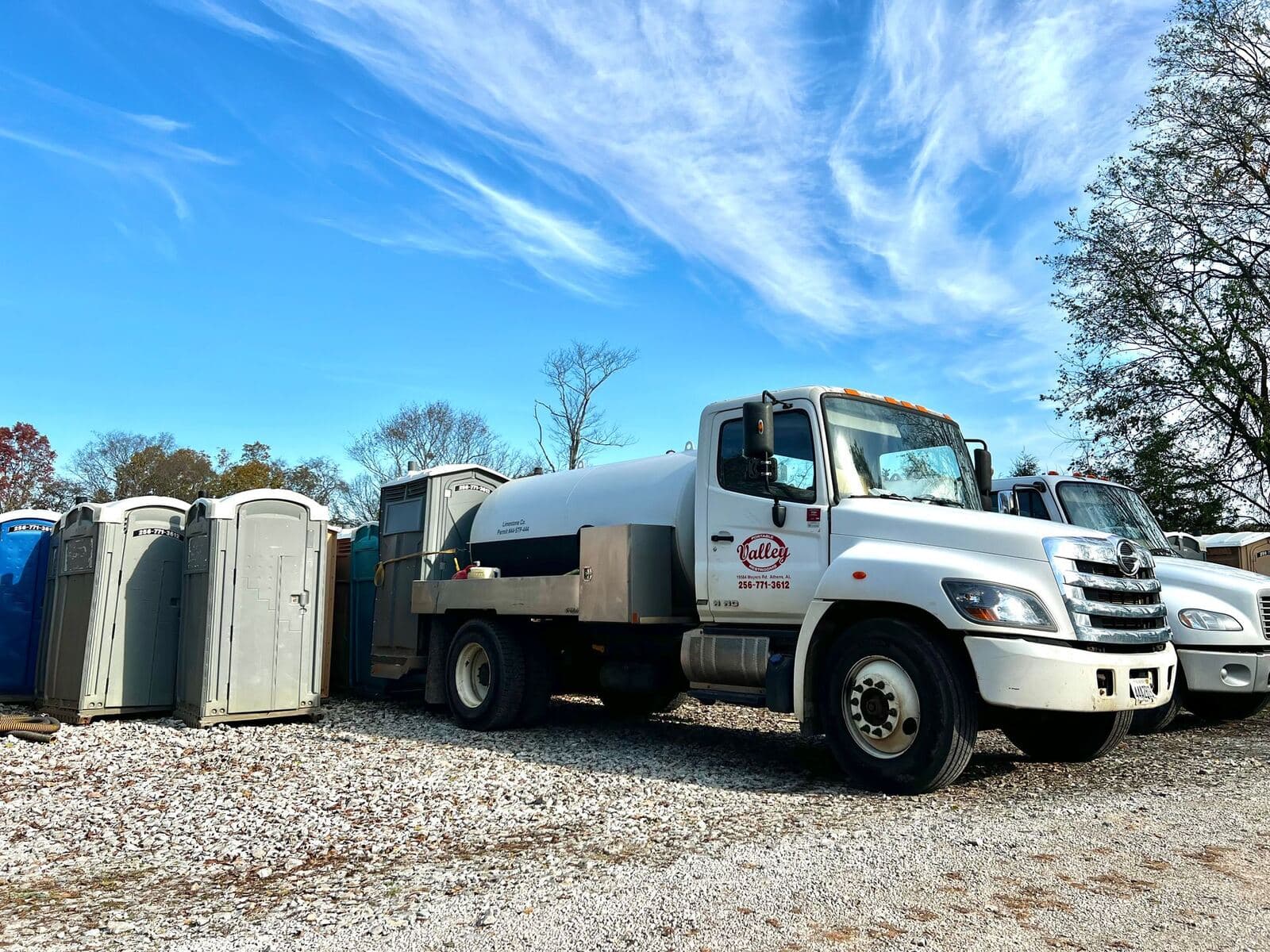
We are a local operator running our own trucks out of Tanner, which on a large event matters more than it does on a two-unit job. If something needs attention at four on a Saturday afternoon, you are calling the company that owns the units rather than a dispatcher who has to find out who was assigned.
Spring and fall book up. If you have a date, call before you have final numbers — the count is easy to adjust later and the date is not.
We handle festival and large event restroom rentals across Athens, Decatur, Huntsville, Madison, Hartselle and Tanner, plus the surrounding Limestone, Morgan, and Madison county areas — see everywhere we serve.
Gate hours and the schedule, not just the ticket count. Concurrent crowd is what units serve.
Pumped and restocked between gates closing and the grounds crew arriving.
Heavy traffic covered centrally, far corners covered locally, ADA in every cluster.
Our trucks and our drivers. Mid-event, you call the company that owns the units.
Attendance is the wrong number to size against on its own — what matters is how many people are on the ground at the same time. A festival with 2,000 tickets sold across a ten-hour day may never have more than 600 people present at once, while a concert with 800 tickets has all 800 there for three hours. Give us expected attendance, gate hours, and whether there is a headline act or a scheduled moment that concentrates the crowd, and the count comes off that. The sizing calculator will get you a starting figure.
Yes, and on anything running more than one day you should assume it. A unit that handled Saturday afternoon at festival volume is not ready for Sunday morning without being pumped and restocked overnight. Mid-event servicing is scheduled into the contract in the window that works for your site — usually after the gates close, before the grounds crew starts.
An event open to the public should include accessible units, and the common planning standard is at least one accessible unit per cluster rather than one for the whole site — an accessible unit on the far side of a festival is accessible on paper only. We will tell you the count when we know your layout. If your event is permitted, check the requirement with the permitting authority too, because it can be specified.
Both, usually. A main bank near the highest-traffic area handles the bulk, and smaller satellite clusters near the far corners of the site stop those areas from generating a walk long enough that people give up and find a treeline. Clustering everything at one end is the most common layout mistake on a large site, and it is the one people notice.
For spring and fall — the two seasons when every event in North Alabama happens at once — as far ahead as you can. Those weekends genuinely fill up, and a large event needs a meaningful share of available inventory reserved at once. If you have a date, call even without final numbers; the count can be adjusted much closer in than the date can.
See event restroom rentals for the general picture, weddings for private celebrations, hand-wash stations where food is being served, and ADA-accessible units for accessibility requirements.
Date, location, expected attendance and gate hours. Greg will size it against your peak and tell you what the servicing schedule should look like.
In a hurry? .